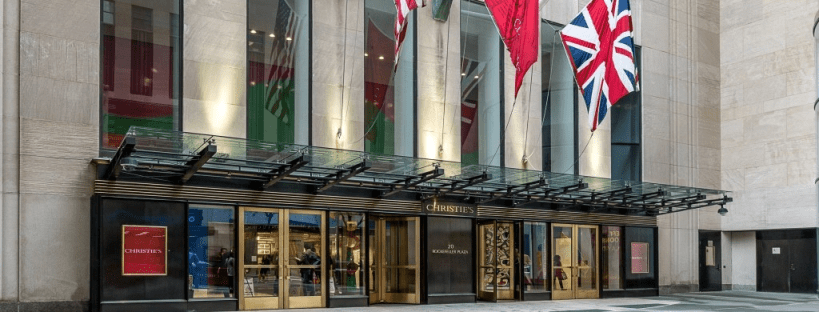
Over 3,000 artists have signed an open letter to Christie’s New York urging them to cancel an upcoming auction of art created using artificial intelligence. The sale, which is titled ‘Augmented Intelligence’ – a term used to describe the subset of AI machine learning which is used to enhance human intelligence rather than replace it – is due to open for bidding on 20th February. The sale features the work of “early AI pioneers of the 1960s”, including Harold Cohen, as well as contemporary artists like Refik Anadol. Works range in value from $10,000 to $250,000 and the auction house expects to bring in more than $600,000.
The sale has, however, sparked backlash from the artist community. Signatures on the open letter include those of artists like Karla Ortiz and Kelly McKernan, who are currently in the process of suing AI companies for using their works to train image generation tools. The letter states that “many of the artworks you plan to auction were created using AI models that are known to be trained on copyrighted work without a licence. These models, and the companies behind them, exploit human artists, using their work without permission or payment to build commercial AI products that compete with them.” The letter goes on to describe how the sale “further incentivises AI companies’ mass theft of human artists’ work.”
A spokesperson for Christie’s has responded that “the artists represented in this sale all have strong, existing multidisciplinary art practices, some recognised in leading museum collections. The works in this auction are using artificial intelligence to enhance their bodies of work and in most cases AI is being employed in a controlled manner, with data trained on the artists’ own inputs.”
Other artists have spoken out in favour of the sale. Sarp Kerem Yavuz, an artist who uses AI and has a work in the upcoming sale, says that there is a misunderstanding of how models are trained using art. “Most AI-generated images result from the combination of millions—literally millions—of images, which means no single artist can claim that an image of a meadow, a heroic knight, a cat or a flower was based on their specific creation. AI-generated images mimic human inspiration in many ways—they’re just more efficient at parsing through information.” Similarly, Mat Dryhurst, whose collaborative work with his wife Holly Herndon is in the sale, has said “it is not illegal to use any model to create artwork. I resent that an important debate that should be focused on companies and state policy is being focused on artists grappling with the technology of our time.” Refik Anadol, posting on X about the backlash, called it “doomsday hysteria.”
 Art Law & More