Controversy over Richter catalogue raisonné

Gerhard Richter has raised an interesting conundrum for collectors and lawyers alike. The well-respected artist has a reputation for a rigorous control of his oeuvre, and has one of the most thorough and comprehensive catalogue raisonné of any artist, living or dead. (Much of this information, which includes a photograph of each work, alongside details of its provenance, exhibition and literature history is available to view online, although the website issues a disclaimer that it is not to be treated as a catalogue raisonné, and therefore ‘may not be relied upon as constituting a representation or warranty that such work is or is not an authentic work of Gerhard Richter’). Continue reading

Battle of the brands: ASOS defence upheld by Court of Appeal majority and ASSOS refused permission to appeal

ASSOS is a specialist cycling clothes business founded in Switzerland which ‘offers advanced, technical apparel’ at the top end of the market. ASSOS sells its goods in 37 countries worldwide, almost exclusively through specialist cycling stores. This is to ensure a high quality purchasing experience consistent with the brand. For this reason, ASSOS does not have an online store.

ASOS is a global online fashion and beauty retail business aimed primarily at fashion-conscious young people. It has always been conducted solely online with no physical shops. Originally called ‘As Seen on Screen’ and offering clothing, accessories and other items worn in TV or in films, the acronym ‘ASOS’ was adopted in early 2002 when ASOS moved towards general fashion clothing. Continue reading

Practical tips to sellers when consigning items to an auction house

Lessons learned from the case of Thwaytes v Sotheby’s

In 2006 Mr Thwaytes consigned a painting, the Cardsharps, to Sotheby’s for further investigation. Sotheby’s advised it was a good 17th Century copy of the original by Caravaggio and the painting was sold at auction for a hammer price of £42,000 to a leading Caravaggio scholar, Sir Denis Mahon, who later announced that he and others believed it to be by Caravaggio, and therefore worth far more. Continue reading

UK rejects Greece’s appeal to negotiate the return of the ever-controversial Elgin marbles

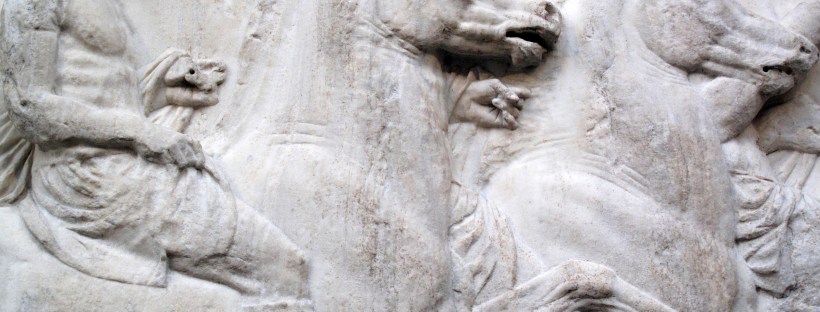
At the end of last month the British Museum and the UK Government formally declined UNESCO’s request to enter into mediation on the subject of transferring the Parthenon marbles back to Greece. Removed by Lord Elgin from the Parthenon temple in Athens in the 1800s, the marbles were sold to the British Museum in 1816 and have remained there ever since. The sculptures date from 447-432 BC, and are divided between London and a purpose built museum in Athens.  Continue reading