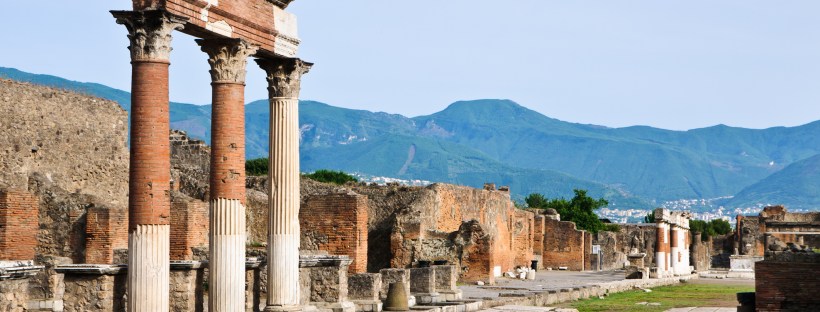
Hidden for almost 2,000 years, a series of breathtaking paintings have been discovered in the ruins of Pompeii. The ancient Roman city was preserved in remarkable condition under the debris spewed out during the eruption of Mount Vesuvius in ACE 79.
The new excavation is the biggest in a generation. So far, a bakery, laundry and grand residence have been excavated with the initials “ARV” inscribed on both buildings. “We know who ARV is: he’s Aulus Rustius Verus,” explained Pompeii Park archaeologist Dr Sophie Hay. “We know him from other political propaganda in Pompeii. He’s a politician. He’s super-rich. We think he may be the one who owns the posh house behind the bakery and the laundry.“
Archaeologists uncovered some of the finest paintings ever found at the site in the villa’s banqueting hall. One fresco shows the priestess Cassandra rejecting the advances of the god Apollo, who cursed her to utter true prophecies that were never believed. Another painting tells of the tragic aftermath where the beautiful Helen meets Prince Paris – a doomed encounter Cassadra knows will spark the Trojan War.
The surrounding walls were painted in a deep black, possibly to hide smoke marks made by burning lamps that illuminated evening banquets. “In the shimmering light, the paintings would have almost come to life,” said Dr Gabriel Zuchtriegel, director of the park.
Protecting the newly exposed buildings is a priority for the excavators. A plaster glue injected into the walls maintains the structure’s integrity and temporary roofing provides protection from the elements. Chief restorer Dr Roberta Prisco said “we have a passion and a deep love for what we’re doing, because what we’re uncovering and protecting is for the joy also of the generations that come after us.”
But the brutal reality of life in ancient Pompeii can be felt throughout the new site as well. Three skeletons – two adults and a child – were found crushed by falling stones in the bakery. Experts believe they may have been slaves, trapped in the building in appalling living conditions. There was evidence that craftsmen had been renovating the roof at the time of the eruption; piles of neatly stacked tiles have survived, alongside half-filled pots of lime mortar and abandoned tools.
The current dig, which started a year ago, is tackling a residential and commercial area known as “Regio IX”. Last year, an exceptionally well preserved still life painting that featured an early ancestor of the pizza was revealed at the site. “Pompeii never ceases to amaze; it is a chest that always reveals new treasures,” marvelled Italy’s Minister of culture Gennaro Sangiuliano.
A whopping third of the lost city is still hidden under several metres of volcanic pumice and ash, and only time will tell what other ancient wonders will rise from the ruins.
 Art Law & More