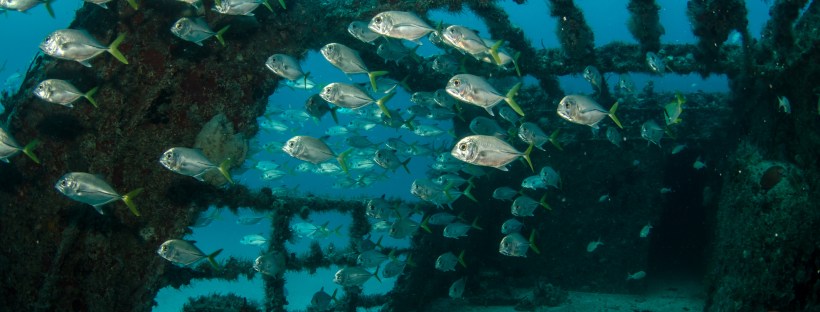
Deepsea divers have discovered 10 ancient shipwrecks off the Greek island of Kasos, alongside a trove of international artefacts. Over a period of four years, the National Research Foundation collaborated with the Greek Ministry of Culture to conduct the exciting maritime excavation.
Kasos, which is located near Crete, was a major ancient trade hub. The small island even supplied ships during the Trojan War, and later became a member of the Delian League. Using Homer’s epic Iliad (c. 8th century BCE) as a guide, archaeologists were able to unearth vessels in the water surrounding the island that spanned thousands of years of history.
“It is the first systematic research on the seabed of Kasos with the main objective of locating, recording and studying the antiquities of an area at the crossroads of cultures and once a centre of navigation,” explained archaeologists at the Kasos Project.
The ships sank at different times, including the Classical, Hellenistic, Roman, and Byzantine periods, as well as a 100-foot long ship from World War II. Scattered around the shipwrecks were a cargo of “unique finds“; Roman ceramics, Spanish amphoras, terra sigillata flasks from Africa, and an Archaic stone-carved anchor from Greece were found languishing on the seabed. The oldest artefact dated back to 3000 BCE. Researchers believe the goods were carried on the ships for trade on the nearby island and further afield.
“This is the first time we have found amphorae from Spain and North Africa, which probably transported oil to Rhodes or the coasts of Asia Minor,” said expedition co-leader, Xanthis Argyris.
From 2019, teams of divers operated at depths of -20 metres up to -47 metres to conduct the excavations. The divers took more than 20,000 underwater photographs during the project, which will allow researchers to digitally reconstruct the ships.
The Greek Ministry of Culture added that “at the same time, the mapping and bathymetry of the Kasos-Karpathos reef and the Karpatholimnion area was carried out for the first time with the use of a side scanning sonar machine.”
A documentary film about the shipwrecks is also under production. In the meantime, archaeology lovers can watch a 12-minute video that chronicles the fascinating underwater mission.
 Art Law & More